Celebrities
October 15, 2025
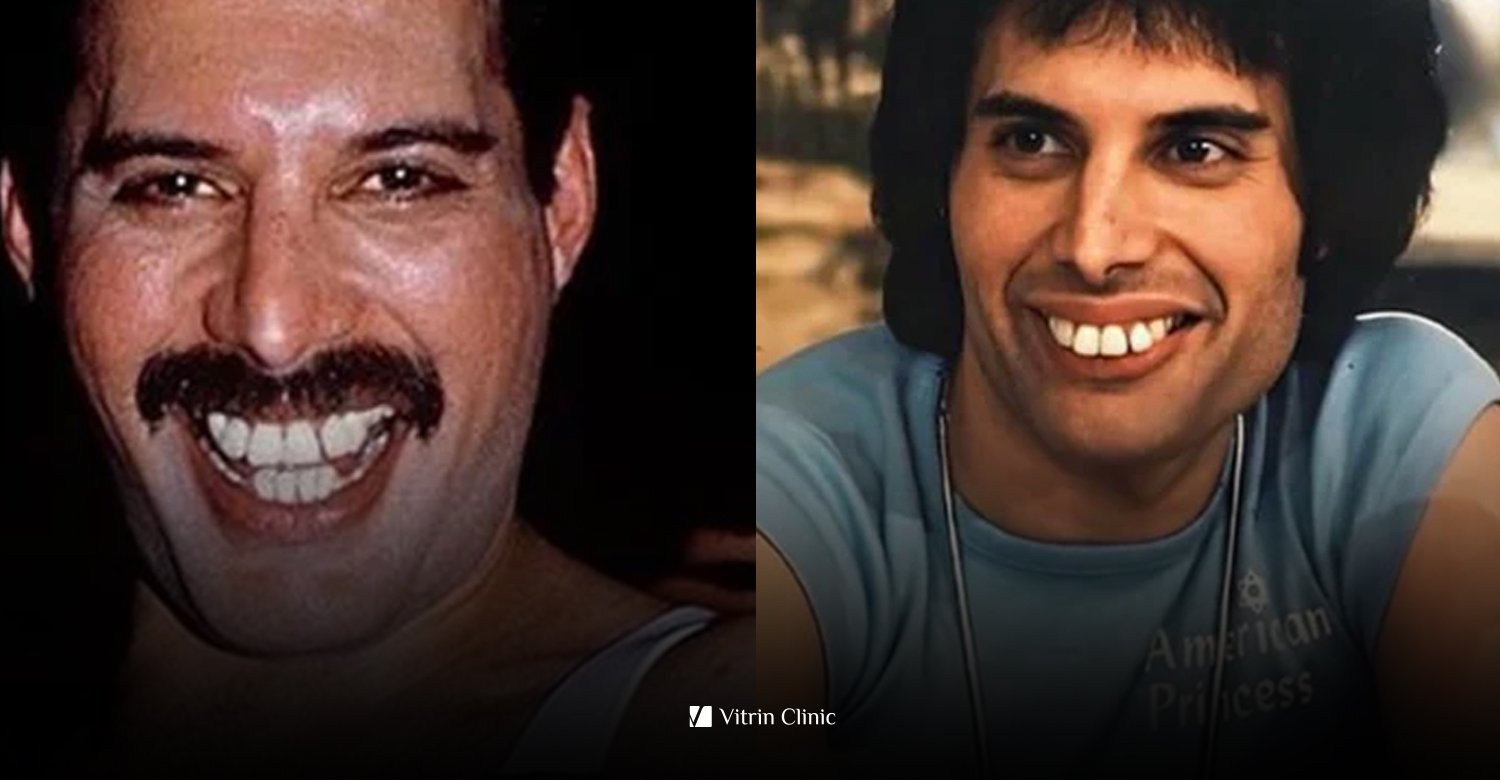
Freddie Mercury was Queen’s legendary front man, known for his four-octave vocal range and electrifying stage presence. His smile became iconic because it defied conventional beauty standards while radiating confidence and charisma. His prominent front teeth and overbite created a distinctive appearance that became inseparable from his identity. Rather than hiding this feature, Freddie owned it completely, transforming potential insecurity into trademark characteristic. His smile represented authenticity, self-acceptance, and the power of embracing uniqueness over conformity.
Freddie’s smile amplified his commanding stage presence by projecting uninhibited confidence and joy. His willingness to smile broadly despite unconventional teeth demonstrated self-assurance that captivated audiences. The distinctive appearance made him instantly recognizable, contributing to his larger-than-life persona. His smile conveyed genuine emotion rather than calculated perfection, creating authentic connection with fans. This authenticity, combined with his theatrical performances and vocal prowess, made his smile integral to the charismatic energy that defined Queen’s legendary live shows.
His smile was instantly recognizable due to prominent front teeth protruding noticeably forward, creating distinctive overbite, the extra incisors crowding his upper jaw, and the confident, uninhibited way he displayed his teeth despite their unconventional appearance. These characteristics combined creating a unique visual signature impossible to mistake. In an era when rock stars increasingly pursued polished perfection, Freddie’s natural, distinctive smile stood out dramatically. His refusal to conform to conventional beauty standards made his appearance memorable, turning what some might consider imperfection into iconic trademark.
Absolutely. His teeth paradoxically enhanced his charisma by demonstrating supreme confidence transcending physical appearance. His willingness to smile broadly and uninhibitedly despite unconventional teeth projected self-assurance that audiences found magnetic. The distinctive appearance contributed to his unique persona, making him unforgettable. His teeth became part of his theatrical, larger-than-life image rather than liability requiring concealment. This confidence-embracing perceived imperfections while commanding worldwide stages became integral to his charismatic appeal, proving that authentic self-expression resonates more powerfully than conformist perfection.
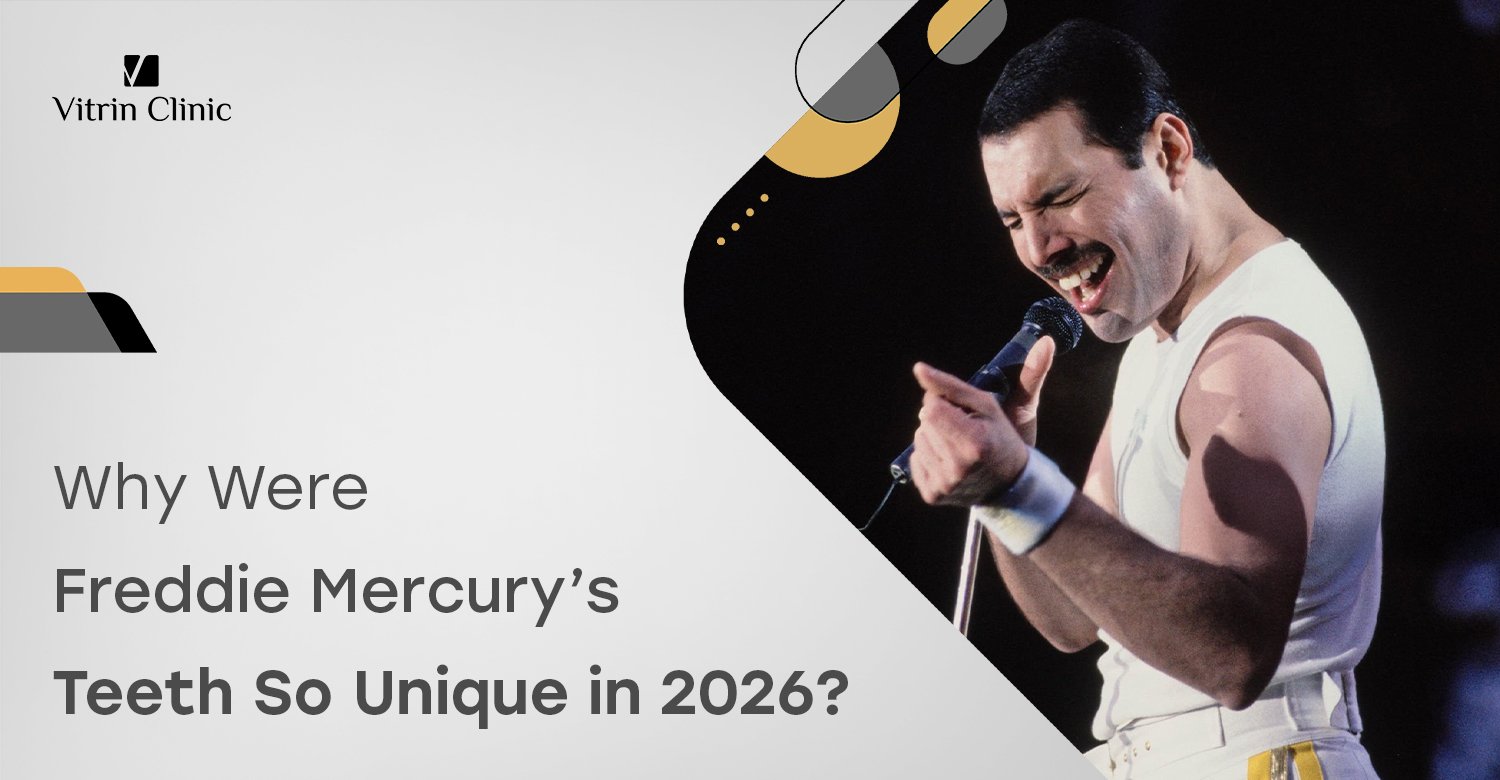
Freddie Mercury had four extra incisors supernumerary teeth creating a crowded upper jaw and distinctive overbite. The question of how many extra teeth did Freddie Mercury have is definitively four additional incisors beyond normal dental complement. This condition, called hypodontia, caused his characteristic protruding front teeth and overcrowded appearance. The Freddie Mercury teeth condition hypodontia remained throughout his life as he chose never to undergo corrective treatment. This rare dental anomaly became his signature physical feature, distinguishing him from other performers and rock icons.
Freddie’s extra teeth resulted from hypodontia, a developmental condition where supernumerary teeth form beyond the standard 32 adult teeth. The exact cause of hyperdontia remains unclear, though genetics likely played a significant role. These extra incisors developed during childhood, creating an overcrowded upper jaw that pushed his front teeth forward prominently. The Freddie Mercury overbite is directly related to these additional teeth forcing existing teeth into abnormal positions. This condition affects only 1-4% of the population, making Freddie’s dental structure genuinely unusual and medically significant.
Supernumerary teeth are extra teeth beyond the normal dental complement32 for adults, 20 for children. They can appear anywhere in the mouth but most commonly develop in the upper jaw near incisors, exactly where Freddie’s extra teeth formed. This condition affects approximately 1-4% of the general population, though prevalence varies by ethnicity and gender, with males affected twice as frequently as females. Supernumerary teeth can cause crowding, displacement of normal teeth, and aesthetic concerns, though some people remain asymptomatic.
This question sparked endless debate among fans and vocal experts. Freddie himself believed his teeth created resonance chambers enhancing his vocal capabilities, though scientific evidence supporting this theory remains inconclusive. Some vocal coaches suggest his oral structure might have influenced tone quality or resonance patterns. However, most experts attribute his extraordinary vocal range to exceptional technique, natural talent, and rigorous practice rather than dental structure. Regardless of actual acoustic impact, his belief that his teeth benefited his voice influenced his decision to refuse corrective treatment.
While speculation exists about whether Freddie Mercury fixed his teeth, all evidence suggests he consistently refused cosmetic correction. Friends and colleagues report he considered treatment but ultimately declined, believing his teeth contributed to his vocal quality and fearing correction might alter his voice. Additionally, his distinctive appearance became so integral to his identity that changing it seemed unthinkable. His decision reflected both practical concerns about vocal impact and philosophical commitment to authenticity over conforming to conventional beauty standards throughout his career.
Freddie refused treatment primarily because he believed his teeth contributed to his exceptional vocal resonance and quality. He feared corrective work might compromise his voice his most valuable asset. Additionally, by the time he achieved fame, his distinctive appearance became a trademark feature inseparable from his identity. Changing his teeth would alter his recognizable image fundamentally. His decision reflected both pragmatic concerns about vocal preservation and deeper confidence in his authentic self, refusing to sacrifice uniqueness for conventional beauty despite industry pressures toward perfection.
Struggling with an uneven bite? Explore modern solutions for effective bite correction
Dentists likely recommended correction during his youth, as orthodontic intervention for supernumerary teeth and severe crowding represents standard care. However, dental records remain private, leaving specific recommendations unknown. By adulthood, particularly after achieving fame, any dental professionals he consulted probably presented options while respecting his concerns about vocal impact. The Freddie Mercury dental work rumors occasionally circulated but never materialized into actual treatment. His consistent refusal of correction despite presumably receiving professional recommendations demonstrates his conviction that his natural teeth served him better than cosmetically perfect alternatives.
Freddie’s teeth shaped his career by becoming inseparable from his iconic image and contributing to his distinctive visual identity. His refusal to fix them despite fame and resources demonstrated authenticity that resonated with fans. The distinctive appearance made him instantly recognizable in photographs and performances. His confidence despite unconventional teeth inspired others embracing their imperfections. Whether his teeth actually enhanced his vocals or simply his belief in their importance, they influenced his artistic choices and became integral to the Freddie Mercury brand representing individuality, confidence, and refusal to conform.
The relationship between Freddie’s teeth and his legendary vocal range remains scientifically unproven but widely debated. He personally believed his oral structure created resonance chambers beneficial to his voice, influencing his refusal of corrective treatment. Some vocal experts theorize his dental configuration might have affected tone quality or resonance patterns slightly. However, most professionals attribute his four-octave range, exceptional control, and distinctive tone to natural talent, rigorous training, and technical mastery rather than anatomical anomalies. Regardless of actual impact, his belief influenced career decisions significantly. Discover the tight end’s charismatic smile of Travis Kelce
Vocal experts remain divided on teeth’s impact on singing quality. Some argue oral cavity structure affects resonance, tone, and projection, suggesting Freddie’s unique anatomy could have contributed to his distinctive sound. Others maintain that vocal quality depends primarily on vocal cords, breath control, and technique rather than dental structure. Recent studies show oral cavity shape influences resonance slightly but doesn’t determine vocal range or quality fundamentally. The consensus suggests while Freddie’s teeth might have contributed minimally to his sound’s unique character, his extraordinary talent transcended anatomical factors.
Queen bandmates accepted and supported Freddie’s decision, maintaining his natural teeth. Brian May, Roger Taylor, and John Deacon never pressured him toward cosmetic correction, respecting his belief that his teeth benefited his voice. They understood his distinctive appearance contributed to Queen’s visual identity and Freddie’s confidence. Bandmates’ support allowed him to embrace his authentic self without internal pressure conforming to conventional standards. Their acceptance reinforced his confidence, creating an environment where his uniqueness flourished rather than being suppressed, contributing to Queen’s overall authenticity and artistic success.
Absolutely. His smile became integral to his theatrical stage persona, used expressively throughout performances. He smiled broadly and frequently despite his teeth, projecting confidence and joy that audiences found infectious. His distinctive appearance contributed to his larger-than-life character, making him visually unforgettable. Rather than minimizing his teeth, he incorporated them into his expressive performance style. The smile became part of his theatrical arsenal sometimes playful, sometimes commanding always authentic. This integration of perceived imperfection into confident performance demonstrated his artistic philosophy of embracing rather than hiding uniqueness.
Fans and media reactions to Freddie’s teeth evolved over time. Initially, some media outlets criticized or mocked his appearance, reflecting conventional beauty biases. However, as his talent and confidence became undeniable, public perception shifted toward admiration and acceptance. Modern fans celebrate his teeth as a symbol of authenticity and self-confidence. The Freddie Mercury smile before and after discussions don’t exist because he never changed his teeth, making his consistent authenticity more remarkable. Contemporary discussions frame his dental distinctiveness positively, viewing it as inspirational rather than problematic or requiring correction. See the hip-hop legend’s iconic smile of Snoop Dogg
Public perception varied throughout his career. Early reactions sometimes included cruel comments or mockery reflecting 1970s-80s beauty standards favoring conventional perfection. However, as Queen’s success grew and Freddie’s confidence radiated through performances, public opinion shifted dramatically toward acceptance and admiration. Fans came to view his distinctive teeth as an endearing trademark rather than flaw. By career peak, his smile became iconic, instantly recognizable and inseparable from his identity. This evolution demonstrated how confidence and talent can reshape public perception, transforming potential stigma into celebrated characteristic.
Media coverage included both criticism and admiration across his career. Early press sometimes made unkind comments about his appearance, including his teeth, reflecting the period’s shallow beauty standards. Tabloids occasionally featured unflattering photos emphasizing his overbite. However, serious music journalism increasingly focused on his extraordinary talent, with critics acknowledging how his confidence transcended conventional appearance standards. By later career and especially posthumously, media narratives shifted entirely toward admiration, celebrating his refusal to conform. Modern media universally frames his distinctive teeth as inspiring symbols of self-acceptance and authenticity.
His smile symbolized confidence because he displayed it proudly despite defying conventional beauty standards in the appearance-obsessed industry. His willingness to smile broadly, perform dramatically, and own his distinctive appearance demonstrated supreme self-assurance. He never covered his mouth, avoided smiling, or showed embarrassment about his teeth, behaviors common among people self-conscious about dental appearance. This uninhibited self-expression while commanding the world’s largest stages proved that confidence comes from internal self-acceptance rather than external perfection, making his smile a powerful symbol transcending mere physical features to represent authentic self-confidence.
Freddie’s legacy influenced modern attitudes toward natural smiles and dental diversity. His confident embrace of unconventional teeth helped normalize accepting unique features rather than pursuing homogeneous perfection. While mainstream celebrity culture still favors cosmetically perfect teeth, growing counter-movement celebrates distinctive features partly inspired by icons like Freddie. The “imperfectly perfect” trend in cosmetic dentistry where slight character is intentionally preserved reflects shifting attitudes that Freddie pioneered. His example encourages modern celebrities and regular people alike embracing distinctive features confidently rather than conforming to generic standards.
Achieve a star-worthy look. Get inspired by the stories behind iconic distinctive Hollywood smiles
Several modern celebrities embrace distinctive teeth including Vanessa Paradis (gap between front teeth), Kirsten Dunst (overlapping incisors), Anna Paquin (characteristic gap), Steve Buscemi (notably crooked teeth), Jewel (crooked teeth early career, later corrected), and Lorde (natural spacing). These celebrities follow Freddie’s example, understanding that distinctive features contribute to memorable identity and authentic personal brand. While less common than cosmetic perfection, these examples demonstrate growing acceptance of dental diversity. However, Freddie remains the most iconic example of embracing significant dental distinctiveness despite intense public scrutiny and industry pressure.
Freddie’s legacy indirectly influenced cosmetic dentistry by contributing to conversations about natural beauty and individual character versus homogeneous perfection. While most patients still request conventional perfection, a growing minority asks for “imperfectly perfect” results preserving unique characteristics. Some patients specifically request maintaining slight gaps, character, or natural variations rather than pursuing uniform perfection. Dentists increasingly discuss the “Freddie Mercury effect “how distinctive features, when owned confidently, become assets rather than liabilities. This philosophical shift toward accepting dental diversity represents his lasting influence on cosmetic dentistry attitudes beyond his music legacy.
The “imperfectly perfect” smile trend describes cosmetic dentistry approaches preserving natural character and slight imperfections rather than creating uniform perfection. Patients request subtle enhancements maintaining distinctive features like small gaps, slight irregularities, or natural variations. This trend values authenticity and individuality over generic Hollywood perfection. Dentists create results appearing enhanced yet natural, avoiding artificial uniformity. The philosophy reflects growing cultural appreciation for diversity and authenticity over conformist standards. While Freddie wouldn’t have needed this trend he kept his completely natural teeth his confident example helped create a cultural space where imperfection is celebrated rather than corrected.
Contemporary dentists view Freddie’s smile with professional interest and personal admiration. Clinically, they recognize his hypodontia and resulting malocclusion represented significant orthodontic challenges that modern treatment could address. However, they also appreciate the powerful lesson his example provides about confidence, personal choice, and understanding that dental perfection isn’t prerequisite for success or happiness. Many use his case discussing patient autonomy and how treatment decisions should reflect individual values rather than societal pressure. His smile reminds dental professionals that their role is supporting patients’ goals, not imposing conventional standards.
Freddie’s smile teaches that authentic confidence transcends physical appearance, that perceived imperfections can become distinctive assets when embraced, that personal choice regarding appearance deserves respect, and that success and charisma don’t require conventional beauty. His example demonstrates how self-acceptance and talent matter more than perfection. For people self-conscious about their teeth, Freddie proves that confidence and personality create lasting impressions while physical features fade in importance. His legacy encourages embracing uniqueness rather than conforming to generic standards, applying beyond dentistry to all aspects of personal identity and self-expression.
Self-confidence proves more powerful because it radiates from within, affecting posture, expression, energy, and interpersonal dynamics regardless of physical features. Freddie commanded the world’s largest stages despite unconventional teeth because his confidence was genuine and unshakeable. Audiences respond to authentic self-assurance more strongly than superficial perfection. Confident people with imperfect features often appear more attractive and charismatic than insecure people with perfect features. Freddie demonstrated that owning your appearance whatever it projects more appeal than pursuing impossible perfection while harboring insecurity. True confidence transcends physical attributes, creating a magnetic presence that a perfect smile alone cannot achieve.
Freddie transformed perceived flaw into trademark through unwavering confidence and refusal to hide or minimize his teeth. Instead of covering his mouth, avoiding smiling, or pursuing correction, he smiled broadly and performed theatrically, making his teeth visible and integrated into his expressive persona. He reportedly believed his teeth benefited his voice, reframing “flaw” as an asset. His extraordinary talent meant audiences focused on his performances rather than his appearance. By owning his distinctiveness completely, he transformed what could have been liability into memorable characteristics that became inseparable from his iconic identity and legendary status.
Freddie’s story teaches modern celebrities that authenticity resonates more deeply than manufactured perfection, that distinctive features can become branding assets rather than liabilities requiring correction, that talent and confidence matter more than conventional beauty, and that respecting personal choice about appearance is crucial for psychological wellbeing. His example encourages celebrities resisting pressure toward homogeneous perfection that erases individuality. For modern stars facing social media scrutiny and beauty standard pressures exceeding what Freddie experienced, his confident authenticity offers a powerful counter narrative: embrace your uniqueness, develop your talents, and let confidence radiate from self-acceptance rather than external validation.
Freddie’s distinctive smile features prominently in pop culture representations, from the biographical film “Bohemian Rhapsody” to countless artistic tributes, documentaries, and fan art. His teeth became so iconic that accurately representing them was crucial for authentic portrayals. The film’s attention to recreating his dental appearance through prosthetics demonstrated how inseparable his teeth were from his identity. Pop culture references often celebrate rather than mock his distinctive features, reflecting evolved cultural attitudes. His smile appears in tributes, merchandise, and artistic interpretations worldwide, testament to how completely it became part of his legendary image.
“Bohemian Rhapsody” made significant efforts accurately portraying Freddie’s distinctive teeth through prosthetic dental appliances. The filmmakers recognized that his smile was crucial to authentic representation, investing considerable resources in recreating it. While not perfectly identical to Freddie’s actual dental structure, the prosthetics captured the essential character protruding front teeth and distinctive overbite. Critics and fans generally agreed the representation successfully conveyed his appearance’s essence. The film’s attention to this detail demonstrated understanding that Freddie’s teeth weren’t incidental detail but integral aspects of his identity requiring faithful recreation for biographical authenticity. Protect your investment. Learn about the affordable options for crown maintenance and repair in Turkey for 2026
Rami Malek wore custom prosthetic dental appliances pushing his front teeth forward, recreating Freddie’s distinctive overbite and protruding incisors. These false teeth, designed by dental prosthetic specialists, transformed Malek’s natural smile into an approximation of Freddie’s characteristic appearance. The prosthetics required adjustment period as Malek learned speaking, singing, and performing while wearing them giving him experiential insight into Freddie’s experience. The commitment to physical accuracy, including this uncomfortable dental transformation, contributed significantly to Malek’s Oscar-winning performance, demonstrating how crucial Freddie’s distinctive teeth were to his recognizable identity and persona.
Numerous artistic tributes feature Freddie’s distinctive smile prominently. Portrait artists emphasize his characteristic teeth as an essential element of his likeness. Sculptures, paintings, and digital art celebrate his smile as a defining feature. Street art and murals worldwide depict him smiling broadly, his teeth prominent and celebrated rather than minimized. Fan art frequently focuses on his expressive face with distinctive dental features. These tributes demonstrate that his smile became a beloved characteristic rather than an embarrassing feature, with artists understanding that accurate representation requires including his teeth prominently. The affectionate artistic attention validates his decision maintaining his natural appearance.
Fans remember his teeth with affection and admiration, viewing them as an inseparable part of his legendary identity. Online communities discuss what made Freddie Mercury’s smile unique with reverence rather than mockery. Tribute performances often include attempts to recreate his distinctive appearance including his teeth. Fans celebrate how he owned his unconventional features confidently, seeing his teeth as a symbol of authenticity and self-acceptance. The Freddie Mercury natural teeth or cosmetic debates conclude by celebrating that he kept his natural teeth throughout his life. Modern fans appreciate his refusal to conform, viewing his distinctive smile as an inspiring example of confident individuality.
Scientifically, Freddie had hyperdontia specifically four supernumerary incisors creating overcrowded upper jaw and resulting in prognathism (protruding jaw/overbite). This condition affects 1-4% of populations, though Freddie’s case was particularly prominent. The extra teeth formed during development, likely due to genetic factors, though exact causes remain incompletely understood. His condition represented a legitimate medical anomaly rather than a simple cosmetic issue. Modern orthodontics could have addressed this through extraction of supernumerary teeth and realignment, though such treatment would have been more complex in his youth than today’s advanced techniques allow.
Extra teeth actually develop during childhood, not adulthood, though they may not erupt until later. Supernumerary teeth form due to excessive dental lamina activity during tooth development. The exact trigger remains unclear but likely involves genetic predisposition combined with developmental factors. These teeth develop in addition to the normal complement, sometimes remaining impacted or erupting to cause crowding like Freddie’s case. Environmental factors during development might influence occurrence, though genetics appears to be the most significant contributor. The condition is more common in males and certain ethnic populations, suggesting strong hereditary components beyond simple developmental accident.
Extra teeth appear to be both genetic and developmental. Research shows hereditary patterns with conditions like hyperdontia running in families, suggesting genetic predisposition. However, not all relatives of affected individuals develop supernumerary teeth, indicating developmental factors also play roles. The genetic component likely creates susceptibility that developmental factors during tooth formation trigger. Some syndromes with known genetic bases include supernumerary teeth as features. Freddie’s case, without known family history, might have represented spontaneous genetic variation or environmental influence on dental development during childhood. The interplay between genetics and development remains incompletely understood scientifically.
Dentists diagnose supernumerary teeth through clinical examination and X-rays revealing extra teeth whether erupted or impacted. Panoramic radiographs show complete dental structure identifying extra teeth and their positions. Treatment typically involves extracting supernumerary teeth, especially if causing crowding, impaction of normal teeth, or functional problems. Following extraction, orthodontic treatment addresses crowding and alignment issues. Early intervention during childhood provides best outcomes. Modern treatment options include clear aligners, traditional braces, and surgical intervention when necessary. The Freddie Mercury teeth surgery cost today would vary by complexity but typically ranges £3,000-£15,000 for comprehensive correction including extraction and orthodontics.
Yes, Freddie’s extra teeth and resulting malocclusion definitely affected his facial structure, particularly his jaw position and lip protrusion. The crowded upper teeth pushed his jaw forward, creating characteristic overbite and affecting his profile. His upper lip protruded noticeably due to the teeth position beneath. This dental structure influenced his overall facial appearance significantly removing the extra teeth and correcting alignment would have altered his face substantially. The Freddie Mercury overbite cause is directly related to his supernumerary teeth forcing abnormal jaw positioning, demonstrating how dental structure profoundly impacts facial aesthetics and structure beyond just smile appearance.
This remains scientifically controversial. Some vocal scientists theorize that oral cavity shape, including dental structure, influences resonance and tone quality. Freddie’s enlarged oral space from protruding teeth might have created a resonance chamber affecting his distinctive sound. However, most experts emphasize that vocal quality primarily depends on vocal cord structure, technique, breath control, and practice rather than dental anatomy. Recent acoustic studies suggest oral cavity modifications produce minimal impact on fundamental vocal capabilities. While his dental structure might have contributed slightly to his unique timbre, his extraordinary four-octave range clearly resulted from exceptional natural gifts and rigorous training.
Freddie’s smile stands in stark contrast to typical celebrity smiles characterized by cosmetic perfection. While most famous performers pursued or pursue conventionally perfect teeth, Freddie’s natural, distinctive smile remained unchanged throughout his career. This contrast makes him unique among rock icons and celebrities generally. His confidence in maintaining natural teeth despite fame, resources, and industry pressure demonstrates rare authenticity. Compared to celebrities with perfect veneers, his natural smile appears more distinctive and memorable precisely because it defied conventions. His example proves that perfection isn’t a prerequisite for iconic status or lasting cultural impact.
Several musicians maintained distinctive teeth including Jewel (crooked teeth until later correction), Madonna (gap between front teeth, later closed), David Bowie (differently colored front tooth), Shane MacGowan (severely deteriorated teeth), Thom Yorke (slightly crooked teeth), and Mike Tyson (distinctive gold front teeth). Among these, Freddie’s dental distinctiveness was most pronounced and medically significant. While others have gaps, minor crookedness, or discoloration, Freddie’s four extra teeth creating severe crowding and overbite represented a truly unusual anatomical condition. His distinctive teeth remain the most famous example of a musician embracing significant dental unconventionality throughout a successful career.
Freddie’s smile differs completely from Hollywood perfection characterized by brilliant whiteness, perfect alignment, uniform sizing, and symmetrical proportions. His teeth were naturally colored rather than professionally whitened, severely crowded rather than aligned, protruding forward rather than straight, and unique rather than conformist. While Hollywood smiles result from veneers, whitening, and orthodontics creating uniform perfection, Freddie’s remained completely natural throughout his life. This stark contrast made his smile more distinctive and memorable than generic perfection. His teeth represented authentic individuality versus manufactured uniformity defining conventional celebrity aesthetics.
Memorable smiles combine distinctiveness, confidence, and authenticity rather than conventional perfection. Freddie’s smile remained unforgettable because it was genuinely unique and displayed with complete confidence. Smiles become memorable when connected to strong personalities, when they convey genuine emotion rather than manufactured perfection, when they feature distinctive characteristics, and when displayed without self-consciousness. Perfect, generic smiles often fade from memory because they lack distinguishing features. Freddie proved that confident authenticity creates a more lasting impression than cosmetic perfection. His smile’s memorability came from its uniqueness combined with the supreme confidence with which he displayed it throughout his legendary performances.
Modern dentistry remembers Freddie’s smile as a fascinating case study in patient autonomy, supernumerary teeth, and the relationship between dental structure and identity. Dental students often learn about his case when studying hyperdontia and treatment decisions. His story reminds practitioners that treatment recommendations must respect patient values, beliefs, and priorities beyond clinical ideals. Dentists use his example discussing how dental appearance affects self-identity and why patients’ treatment choices deserve respect even when declining recommended interventions. His smile represents an important lesson that dental perfection isn’t a universal goal individual choice and autonomy should guide treatment decisions.
Yes, dental educators frequently reference Freddie’s case when teaching about supernumerary teeth, malocclusion, and patient-centered care. His famous example makes hyperdontia memorable for students learning about this condition. Professors use his story illustrating the importance of respecting patient treatment decisions even when declining recommended interventions. His case demonstrates how dental conditions exist within the context of individual lives, careers, and identities rather than as isolated clinical problems. The discussion about whether his teeth affected his voice provides an opportunity to explore the relationship between oral structures and function beyond typical dental considerations, making his case a valuable teaching example across multiple topics.
Freddie’s story contributed to gradually evolving attitudes about natural smiles and dental diversity. His example demonstrates that success, charisma, and cultural impact don’t require dental perfection. For people self-conscious about their teeth, his confident example provides inspiration that appearance doesn’t determine worth or potential. Dental professionals increasingly recognize that treatment goals should reflect patient values rather than imposed standards. While mainstream culture still favors cosmetic perfection, growing counter-movement celebrates diversity partly inspired by icons like Freddie. His influence is philosophical rather than creating a direct trend toward keeping imperfect teeth, but his legacy encourages authentic self-acceptance.
Personality plays a crucial role in defining great smiles perhaps more than physical characteristics. Freddie’s smile was “great” not because of its appearance but because of the confidence, joy, and authenticity behind it. A warm, genuine smile from a confident person appears more attractive than a perfect smile from an insecure individual. Personality affects how people smile frequency, genuineness, emotional connection mattering more than dental structure. Freddie’s magnetic personality made his smile memorable despite unconventional appearance. This demonstrates that great smiles result from internal qualities confidence, warmth, authenticity expressed through physical features rather than perfect features alone determining smile quality or impact.
Modern cosmetic dentistry could have completely transformed Freddie’s smile through comprehensive treatment. Orthodontists would extract the four supernumerary teeth, use braces or clear aligners correcting remaining teeth alignment, address the overbite through orthodontic mechanics or surgical intervention if necessary, and potentially follow with veneers creating perfectly aligned, bright smiles. The Freddie Mercury teeth surgery cost using today’s techniques would range £8,000-£20,000 depending on complexity and location. Such treatment would have dramatically altered his facial structure and appearance, potentially affecting his unique identity and possibly his vocal characteristics as he feared.
Today, Freddie could choose from comprehensive options including surgical extraction of supernumerary teeth, Invisalign or traditional orthodontics for alignment correction, orthognathic surgery for severe overbite if needed, porcelain veneers after alignment for aesthetic perfection, professional teeth whitening, and gum contouring for ideal proportions. Treatment would require 18-36 months for complete transformation combining extractions, orthodontics, and final cosmetic work. Modern digital planning would show predicted results before beginning. However, given his beliefs about his voice and his confident identity, he likely would decline treatment even with today’s advanced, less invasive options available for comprehensive correction of his condition.
Either treatment would have drastically altered his iconic appearance. Orthodontics would have straightened his teeth and corrected his overbite, completely changing his facial profile and smile. Veneers would create perfect teeth fundamentally different from his natural appearance. Either transformation would have made him less recognizable, potentially diminishing the distinctive features that became his trademark. His facial structure would change significantly with orthodontic correction of his malocclusion. The alteration would affect not just his teeth but his entire facial appearance, lip position, and profile essentially changing his physical identity that became so ironically recognizable worldwide through Queen’s success.
Modern techniques could theoretically create compromise preserving some natural character while addressing severe crowding and functional issues. Conservative treatment might extract only the most problematic teeth, provide minimal orthodontic correction addressing crowding without completely eliminating overbite, and use natural-looking materials if veneers are necessary. However, truly preserving his distinctive appearance while significantly correcting his condition would be challenging. His charm came partly from complete naturalness and confidence moderate intervention might have created the worst of both worlds. Modern dentists might counsel that for someone whose distinctive appearance became trademark, leaving natural features intact made more sense than pursuing partial correction.
Whether correction would have affected his voice remains scientifically uncertain, though Freddie believed it would and that belief alone might have influenced his vocal confidence and performance. Confidence often affects vocal performance through reduced tension and increased risk-taking. If correcting his teeth undermined his confidence in his voice or made him self-conscious about altered appearance, it could have negatively impacted his performances regardless of actual acoustic effects. His confidence came partly from owning his authentic self, correcting his most distinctive feature might have psychologically affected his self-assurance. The potential voice impact, whether real or perceived, made his decision to refuse correction understandable and possibly wise for his career.
[sc_fs_multi_faq headline-0=”h3″ question-0=”Why did Freddie Mercury have extra teeth in the first place?” answer-0=”He had four extra incisors due to a condition called supernumerary teeth.” image-0=”” headline-1=”h3″ question-1=”Did Freddie Mercury’s teeth help him sing better?” answer-1=”He believed they gave him greater vocal range and resonance.” image-1=”” headline-2=”h3″ question-2=”How many extra teeth did Freddie Mercury actually have?” answer-2=”He had four additional teeth, which pushed his front teeth forward.” image-2=”” headline-3=”h3″ question-3=”Did he ever plan to fix his teeth before his death?” answer-3=”No, he refused to fix them, fearing it would affect his voice.” image-3=”” headline-4=”h3″ question-4=”Are Freddie Mercury’s dental impressions preserved anywhere?” answer-4=”There’s no public record of dental impressions being preserved.” image-4=”” headline-5=”h3″ question-5=”Did Rami Malek wear fake teeth in Bohemian Rhapsody?” answer-5=”Yes, he wore custom prosthetic teeth to portray Freddie accurately.” image-5=”” headline-6=”h3″ question-6=”How did Freddie’s teeth contribute to his image as a performer?” answer-6=”They became part of his iconic look, unique, bold, and unapologetic.” image-6=”” headline-7=”h3″ question-7=”What lessons can modern celebrities learn from Freddie’s natural smile?” answer-7=”Authenticity can become your trademark; perfection isn’t always necessary.” image-7=”” headline-8=”h3″ question-8=”Did Freddie’s fans ever campaign for him to fix his teeth?” answer-8=”With no known campaigns, most fans embraced his individuality.” image-8=”” headline-9=”h3″ question-9=”How does Freddie Mercury’s smile continue to inspire people today?” answer-9=”It symbolizes self-confidence, uniqueness, and staying true to yourself.” image-9=”” count=”10″ html=”true” css_class=””]

O Dr. Faisal Kayali possui mais de 7 anos de experiência clínica e faz parte atualmente da equipe médica da Vitrin Clinic.