Dental Implant
October 13, 2025
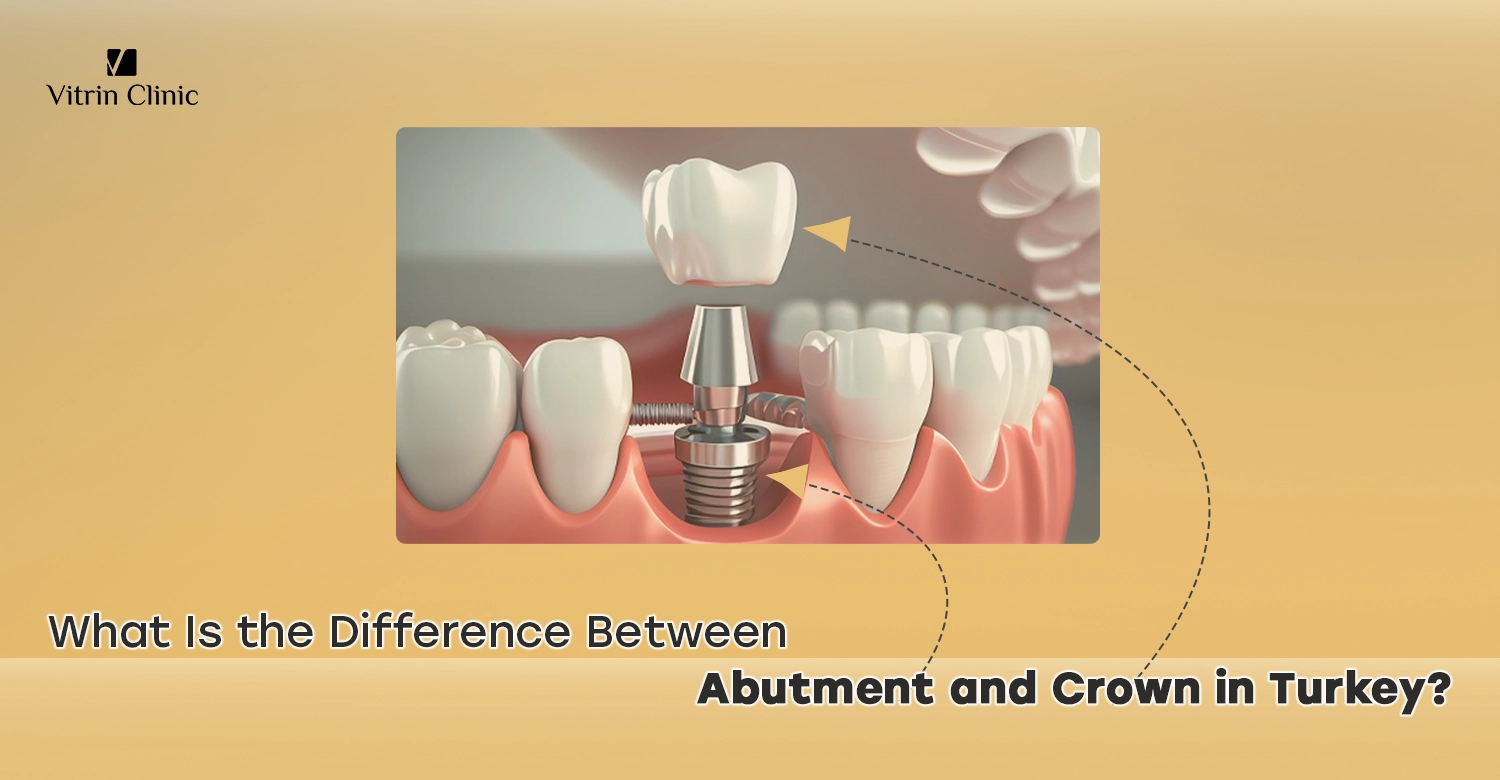
Abutment vs crowns are distinct yet complementary components in dental implant restorations. The abutment is a connector piece attached to the implant fixture below the gumline, serving as the foundation for the prosthetic tooth. The crown is the visible, tooth-shaped restoration that sits above the gumline, providing aesthetics and function. Turkish dental clinics expertly combine these components to create natural-looking, durable tooth replacements. Understanding the differences between abutments and crowns helps patients appreciate how each element contributes to successful implant treatment outcomes.
Understanding the abutment-crown distinction is crucial because each component serves unique functions requiring different materials, designs, and maintenance approaches. Abutments provide structural connection and tissue support, while crowns deliver aesthetics and functional surfaces. Turkish dental professionals educate patients about these differences to set realistic expectations and ensure proper care protocols for long-term implant success.
The abutment functions as a structural bridge connecting the implant fixture in bone to the crown above gum tissue. It screws into the implant, protrudes through gingiva, and provides a prepared surface for crown attachment. Turkish dentists select abutments carefully to ensure proper force distribution, tissue support, and aesthetic emergence profiles for optimal restoration success.
Turkish clinics commonly use stock abutments (pre-manufactured, cost-effective), custom abutments (individually designed for complex cases), titanium abutments (strong, biocompatible), zirconia abutments (tooth-colored, aesthetic), temporary healing abutments (tissue shaping), and angled abutments (correcting implant positioning). Selection depends on location, aesthetics, and individual patient anatomy.
Customized abutments improve results by creating optimal emergence profiles supporting natural tissue architecture, correcting suboptimal implant angles, accommodating unique anatomical variations, preventing tissue recession through precise contouring, and maximizing aesthetic outcomes in visible zones. Turkish laboratories use CAD/CAM technology fabricating custom abutments with microscopic precision impossible with standardized components.
The crown functions as the visible, functional tooth replacement restoring chewing ability, speech, and aesthetics. It provides the biting surface, natural appearance, and protection for underlying structures. Turkish prosthodontists design crowns matching adjacent teeth in color, shape, and size, creating restorations indistinguishable from natural dentition while withstanding normal masticatory forces.
Main crown materials include porcelain-fused-to-metal (PFM) offering strength with reasonable aesthetics, all-ceramic/porcelain providing superior natural appearance, zirconia combining strength and tooth-colored aesthetics, metal alloys for durability in posterior regions, and composite resins for temporary restorations. Turkish clinics offer all premium materials, recommending based on location and aesthetic requirements.
Zirconia crowns offer superior strength (suitable for all teeth including molars), high fracture resistance, tooth-colored appearance, and biocompatibility. Porcelain crowns provide exceptional translucency mimicking natural teeth perfectly but have slightly lower strength. Turkish dentists recommend zirconia for posterior teeth and high-force areas, porcelain for front teeth demanding maximum aesthetics.
Abutments and crowns work together as integrated systems—the abutment provides structural foundation and tissue interface while the crown delivers functional and aesthetic restoration. The abutment’s emergence profile shapes gum architecture supporting natural crown appearance. Turkish dental teams carefully coordinate abutment selection with crown design, ensuring optimal integration producing restorations that function naturally and appear lifelike.
During abutment placement, Turkish dentists administer local anesthesia, expose the integrated implant (removing healing abutment or tissue), clean the implant interior, thread the permanent abutment into the implant, torque to proper specifications (25-35 Ncm), verify complete seating, position surrounding tissue, and provide post-operative instructions. The procedure takes 30-45 minutes per implant.
Abutment placement is a minor surgical procedure requiring anesthesia, tissue manipulation, and healing time before crown fabrication. Crown placement is a prosthetic procedure involving impressions, try-in appointments, and final cementation or screw-retention without surgery. Turkish clinics separate these procedures by two to four weeks, allowing tissue maturation around abutments before crown delivery.
Healing takes two to four weeks after abutment placement before tissues stabilize sufficiently for final crown impressions and delivery. Turkish dentists assess tissue health, ensure abutment stability, and verify adequate soft tissue maturation during follow-up appointments. Some cases may proceed faster; complex aesthetic cases may require extended healing ensuring optimal tissue architecture development.
Crowns attach to abutments through two methods: cement-retained (crown bonded to abutment with dental cement, simple but less retrievable) or screw-retained (crown secured with screws through access holes, retrievable but potentially less aesthetic). Turkish prosthodontists select retention methods based on aesthetics, retrievability needs, and clinical situations, explaining advantages of each approach.
Crown installation steps include taking impressions or digital scans of prepared abutments, fabricating crowns in laboratories (typically 5-7 days), scheduling try-in appointments verifying fit and aesthetics, making adjustments if needed, and final cementation or screw-retention. Turkish clinics provide temporary crowns if immediate aesthetics are required, ensuring patients never leave without teeth.
Crown fitting is crucial because proper fit prevents food trapping and bacterial accumulation, distributes occlusal forces correctly preventing overloading, maintains healthy tissue contacts, enables effective oral hygiene, and ensures patient comfort during function. Turkish prosthodontists meticulously adjust crown contacts, contours, and occlusion, creating restorations that integrate seamlessly with remaining dentition.
Key functional differences include: abutments provide structural connection and tissue interface (not visible, primarily mechanical), while crowns provide functional surfaces and aesthetics (visible, prosthetic). Abutments are permanent fixtures rarely requiring replacement; crowns may need replacement every 10-20 years. Turkish dental teams explain these distinctions helping patients understand each component’s critical role.
Abutments support oral health by creating biological seals preventing bacterial invasion, distributing forces to bone properly, maintaining tissue architecture, and enabling hygiene access. Crowns support health by restoring proper chewing function, preventing adjacent tooth shifting, enabling thorough cleaning when properly contoured, and protecting underlying structures. Together they maintain oral system balance.
The abutment plays critical stability roles by creating secure mechanical connections to implants, distributing occlusal forces along optimal vectors, supporting soft tissue architecture preventing collapse, maintaining crestal bone levels through proper loading, and providing retention platforms resisting crown loosening. Turkish dentists emphasize proper abutment selection because it fundamentally determines long-term restoration stability.
The crown plays the primary aesthetic role by providing natural tooth color matching adjacent dentition, creating proper shape and proportions, delivering translucency mimicking enamel, establishing proper contacts preventing black triangles, and integrating seamlessly into the smile. Turkish prosthodontists invest significant attention in crown aesthetics because visible appearance determines patient satisfaction.
Abutments are extremely durable, typically lasting the implant’s entire lifespan (decades) without requiring replacement unless complications occur. Crowns have finite lifespans of 10-20 years typically due to wear, staining, or chipping of prosthetic materials. Turkish clinics use premium crown materials and proper occlusal adjustment extending crown longevity while recognizing eventual replacement needs.
For abutments, titanium provides maximum strength and longevity; zirconia offers excellent strength with aesthetic advantages. For crowns, zirconia provides superior strength and durability; porcelain-fused-to-metal offers good strength; all-porcelain provides beauty but moderate strength. Turkish dentists match materials to functional demands—stronger materials for molars, aesthetic options for front teeth.
Abutment maintenance involves professional monitoring for stability and tissue health during regular checkups, minimal patient intervention beyond general oral hygiene. Crown maintenance requires careful daily cleaning removing plaque, avoiding excessive forces (hard foods, grinding), regular professional evaluation for wear or damage, and potential replacement after 10-20 years. Turkish clinics provide specific maintenance protocols.
Abutments cost $100-400 in Turkey (stock titanium $100-150, custom zirconia $250-400). Crowns cost $150-400 (porcelain-fused-to-metal $150-250, all-ceramic/zirconia $250-400). Complete implant packages including both components range $500-800 total. These prices represent 60-70% savings versus Western countries where comparable treatments exceed $2500-4000, making Turkey highly attractive for dental tourism.
Turkey is popular because it offers 60-70% cost savings, high-quality care from experienced specialists, modern facilities with advanced technology, comprehensive service packages, convenient location between Europe and Asia, rich tourism opportunities, English-speaking staff, and established dental tourism infrastructure. Over 500,000 international dental patients visit Turkey annually seeking affordable excellence.
Turkish abutments ($100-400) cost $400-1200 in Europe and $500-1500 in the US. Turkish crowns ($150-400) cost $600-1500 in Europe and $800-2000 in America. Complete implant treatments cost $500-800 in Turkey versus $2500-4000 in Europe and $3000-5000 in the US, representing dramatic savings attracting patients worldwide.
Cost factors include abutment type (stock versus custom), crown material (zirconia costs more than porcelain-fused-to-metal), complexity of case, dentist experience and reputation, clinic location (Istanbul typically higher), laboratory quality, whether treatment is packaged or itemized, and number of units required. Turkish clinics provide transparent pricing breakdowns during consultations.
Yes, most Turkish clinics include abutments and crowns in comprehensive implant packages advertised to international patients. These all-inclusive packages typically cost $500-800 covering implant surgery, fixture, abutment, crown, and follow-ups. This bundled pricing simplifies cost comparison and eliminates surprise expenses, though patients should confirm specific inclusions during treatment planning consultations.
Turkish clinics bundle services by offering fixed-price packages covering consultation, diagnostics (x-rays, CT scans), implant surgery with fixture, healing period monitoring, abutment placement, crown fabrication and delivery, and initial follow-up appointments. Some include accommodation and airport transfers. Bundling provides convenience, cost savings, and simplified treatment coordination for international patients.
Additional fees may include bone grafting if needed ($200-500), sinus lifts for upper posterior teeth ($300-800), soft tissue grafting ($150-400), sedation options ($100-300), premium materials upgrades, multiple crowns on single implants, revision procedures if complications arise, and extended warranties. Turkish clinics transparently disclose potential additional costs during initial consultations.
Both components are equally essential—implants cannot function without properly selected abutments AND well-fabricated crowns. The abutment provides structural foundation; the crown delivers function and aesthetics. Turkish dental professionals emphasize that successful implant treatment requires optimizing both components rather than prioritizing one. Poor abutment selection compromises even perfect crowns; excellent abutments cannot compensate for inadequate crowns.
Dentists decide based on implant location (anterior versus posterior), tissue characteristics (biotype, thickness), aesthetic requirements (visible versus non-visible zones), implant angulation (straight versus angled), occlusal forces anticipated, patient budget, and prosthetic design planned. Turkish prosthodontists use systematic evaluation protocols ensuring optimal abutment selection for individual circumstances and treatment objectives.
Stock abutments are pre-manufactured in standardized sizes, immediately available, cost-effective ($100-150), and suitable for straightforward cases. Custom abutments are individually designed, precisely match unique anatomies, provide superior aesthetics, cost more ($250-400), and are essential for complex cases. Turkish dentists select stock for suitable situations, custom when individualization justifies additional investment.
Digital scans capture precise three-dimensional data of implant positions and surrounding anatomy, eliminating conventional impression distortions. Turkish laboratories use scan data in CAD software designing custom abutments with optimal emergence profiles, margins, and angulations. Digital workflows improve accuracy, reduce fabrication time from weeks to days, and enable virtual treatment planning before manufacturing begins.
Patients care for abutments and crowns through daily brushing with soft-bristled toothbrushes, gentle flossing around restorations, avoiding hard foods that could damage components, using water flossers facilitating cleaning, attending regular professional cleanings (every six months), and immediately reporting any loosening, discomfort, or changes. Turkish clinics provide detailed care instructions and follow-up monitoring.
Daily hygiene includes brushing twice daily with soft-bristled brushes and non-abrasive toothpaste, flossing daily around crowns and between adjacent teeth, using interdental brushes or water flossers around abutments, rinsing after meals, avoiding tobacco products, and maintaining overall oral health. Turkish dental professionals emphasize meticulous hygiene prevents peri-implantitis and crown complications.
Clean around abutments using soft-bristled toothbrushes with gentle circular motions at the gumline, interdental brushes sized appropriately for spaces, water flossers on low settings flushing debris, and prescribed antimicrobial rinses if inflammation develops. Avoid aggressive scrubbing that could traumatize tissues. Turkish dentists demonstrate proper techniques during follow-up appointments ensuring patients understand correct methods.
Maintain crown surfaces by brushing thoroughly removing plaque, avoiding abrasive toothpastes that could scratch materials, flossing daily preventing gum disease, avoiding staining substances (coffee, red wine, tobacco), not using teeth as tools, wearing night guards if grinding occurs, and attending professional cleanings removing calculus. Turkish prosthodontists recommend specific products suitable for crown materials.
Problems include abutment loosening (most common, correctable through re-tightening), crown chipping or fracture (requiring repair or replacement), peri-implantitis (infection around implants), tissue recession exposing abutments or margins, crown loosening or documentation, aesthetic issues (color mismatch, poor contours), and occlusal problems (high bites, premature contacts). Turkish clinics address complications promptly through regular monitoring.
Early signs include abutment or crown mobility when touched, bleeding or inflammation around restorations, persistent pain or discomfort, foul taste or odor, visible gaps between crown and gum, crown color changes or staining, and difficulty chewing or discomfort during function. Turkish patients experiencing these symptoms should contact their dental clinic immediately for evaluation preventing minor issues from becoming serious problems.
Patients should visit dentists every six months for routine examinations and professional cleanings, immediately if complications arise (loosening, pain, bleeding), annually for comprehensive evaluations with radiographs, when crowns show wear or damage, if tissue recession exposes abutment components, and for occlusal adjustments if bite feels uncomfortable. Turkish clinics provide ongoing care coordination.
Abutments provide structural stability, tissue support, and force distribution but aren’t visible or aesthetic components. Crowns deliver aesthetics, function, and natural appearance but require eventual replacement and careful maintenance. Both have advantages and limitations—abutments are extremely durable (lasting decades) but mechanically focused; crowns provide beauty and function but have finite lifespans (10-20 years typically).
Abutment advantages include creating secure mechanical connections to implants, distributing forces optimally preventing bone loss, supporting healthy tissue architecture, enabling various prosthetic options, allowing crown retrievability without disturbing implants, extreme durability rarely requiring replacement, and material choices (titanium for strength, zirconia for aesthetics) matching clinical needs. Turkish dental teams emphasize proper abutment selection.
Abutments ensure stability by creating rigid connections minimizing micro-movements, transferring occlusal forces along implant long axes, preventing lateral loads damaging bone, providing retention platforms resisting loosening, supporting organized tissue architecture, and enabling proper crown design facilitating hygiene. Turkish dentists use calibrated torque wrenches achieving optimal abutment tightness preventing mechanical complications.
Custom abutments excel in complex cases by correcting suboptimal implant angles, accommodating unique anatomical variations, creating optimal emergence profiles supporting tissue health, preventing recession in thin tissue biotypes, maximizing aesthetic outcomes in visible zones, and enabling precise prosthetic designs impossible with standardized components. Turkish laboratories fabricate custom abutments addressing challenges stock options cannot overcome.
Crown advantages include restoring complete chewing function, providing natural-looking aesthetics matching adjacent teeth, protecting underlying structures, preventing tooth shifting, enabling various material choices (zirconia, porcelain, PFM), customizable colors and shapes, and relatively straightforward replacement if needed. Turkish prosthodontists create crowns indistinguishable from natural teeth using advanced materials and techniques.
Crowns restore function by providing proper occlusal surfaces for efficient mastication, distributing bite forces evenly across the dental arch, replacing missing tooth structure completely, enabling comfortable chewing without sensitivity, and maintaining vertical dimension preventing jaw problems. Turkish dentists carefully adjust crown occlusion ensuring even contacts preventing overloading and enabling efficient, comfortable function.
Crowns are essential for aesthetics because they provide visible tooth structure determining smile appearance, offer color matching adjacent dentition, create proper shapes and proportions, deliver translucency mimicking natural enamel, eliminate black triangles through proper contacts, and integrate seamlessly into smiles. Turkish prosthodontists invest significant attention in crown aesthetics because appearance determines patient satisfaction.
Abutment limitations include potential loosening requiring re-tightening, fracture risk (especially zirconia under extreme forces), aesthetic compromises (gray titanium showing through thin tissue), and limited adjustability once placed. Crown limitations include finite lifespans (10-20 years typically), chipping or fracture risk, staining or wear over time, potential documentation, and aesthetic challenges matching natural teeth perfectly.
Abutments typically last the implant’s entire lifespan (20-30+ years) without requiring replacement unless complications occur. Crowns last 10-20 years typically depending on material (zirconia lasts longer), location (posterior crowns wear faster), patient habits (grinding reduces lifespan), and maintenance quality. Turkish clinics use premium materials and proper techniques maximizing component longevity.
Poor maintenance causes peri-implantitis (infection destroying bone around implants), abutment loosening from bacterial infiltration, tissue recession exposing components, crown fracture from excessive forces, decementation from inadequate hygiene, accelerated wear, staining, and eventually implant failure. Turkish dental professionals emphasize proper care protocols because maintenance directly determines whether restorations survive decades or fail prematurely.
Turkish dental technology improvements include CAD/CAM systems enabling precise custom component fabrication, digital scanners eliminating uncomfortable impressions, 3D treatment planning optimizing implant positioning, advanced materials (high-translucency zirconia, layered ceramics), laser dentistry for tissue management, and guided surgery improving accuracy. Technology investments demonstrate Turkish commitment to world-class care rivaling or exceeding Western standards.
CAD/CAM technology revolutionizes abutment design by enabling three-dimensional digital modeling of optimal emergence profiles, precise margin positioning, perfect implant connection geometry, and individualized angulation corrections. Turkish laboratories mill custom abutments from solid blocks with microscopic precision impossible through traditional methods, reducing fabrication time from weeks to 3-5 days while improving fit accuracy dramatically.
Digital scans improve accuracy by capturing precise three-dimensional implant positions without distortion inherent in conventional impressions, enabling immediate quality verification and retakes if needed, facilitating laboratory communication through electronic file transfer, and allowing virtual design before manufacturing. Turkish clinics using intraoral scanners provide more comfortable, accurate, and efficient workflows than traditional impression methods.
Technology reduces treatment time through digital impressions eliminating shipping delays, CAD/CAM in-house fabrication producing components in days versus weeks, guided surgery reducing procedure complexity, and digital treatment planning streamlining workflows. Turkish clinics offering same-day or next-day custom components dramatically shorten treatment timelines compared to traditional laboratory processes, benefiting international patients minimizing travel requirements.
Advanced materials improve durability through high-strength zirconia (1000+ MPa flexural strength) resisting fracture, layered ceramics combining strength and aesthetics, improved adhesives enhancing retention, biocompatible alloys preventing corrosion, and nano-hybrid composites for provisional restorations. Turkish laboratories work with all premium materials, selecting based on functional demands and aesthetic requirements for optimal longevity.
Zirconia is popular in Turkey because it combines exceptional strength suitable for all teeth, tooth-colored aesthetics eliminating metal visibility, excellent biocompatibility, high fracture resistance, minimal plaque accumulation, and cost-effectiveness through efficient CAD/CAM fabrication. Turkish dental tourism patients appreciate zirconia’s superior aesthetic outcomes at prices 60-70% lower than Western countries where similar materials are prohibitively expensive.
New materials improve aesthetics through high-translucency zirconia mimicking natural enamel light transmission, layered ceramics replicating natural tooth depth and color variation, improved color stability resisting staining, surface treatments enhancing gloss and lifelike appearance, and biomimetic materials matching natural tooth optical properties. Turkish prosthodontists use the latest materials creating restorations indistinguishable from natural teeth.
[sc_fs_multi_faq headline-0=”h3″ question-0=”What Is the Main Difference Between Abutment and Crown in a Dental Implant?” answer-0=”The abutment connects the implant to the crown, while the crown is the visible, tooth-like part that completes the restoration.” image-0=”” headline-1=”h3″ question-1=”How Long Does It Take to Get Both Abutment and Crown in Turkey?” answer-1=”It typically takes 1–2 weeks, though some clinics offer faster options depending on the case and materials used.” image-1=”” headline-2=”h3″ question-2=”Are Abutments Always Required for Crowns?” answer-2=”Yes, in implant cases, an abutment is necessary to support and secure the crown to the implant.” image-2=”” headline-3=”h3″ question-3=”What Happens If a Crown Breaks but the Abutment Is Still Fine?” answer-3=”The crown can be replaced without changing the abutment, as long as the abutment is undamaged and fits properly.” image-3=”” headline-4=”h3″ question-4=”How Do Dentists Choose Between a Stock Abutment and a Custom Abutment?” answer-4=”They consider the implant position, gum contour, bite, and aesthetic goals to determine the best option.” image-4=”” headline-5=”h3″ question-5=”Can Patients Replace Just the Crown Without Changing the Abutment?” answer-5=”Yes, crowns can usually be replaced independently if the abutment is intact and compatible.” image-5=”” headline-6=”h3″ question-6=”How Much Does a Crown Cost in Turkey Compared to an Abutment?” answer-6=”Crowns generally cost more than abutments, especially if made from premium materials like zirconia or porcelain.” image-6=”” headline-7=”h3″ question-7=”Which Is More Painful: Abutment Placement or Crown Placement?” answer-7=”Abutment placement may cause slight soreness; crown placement is usually painless as it’s non-surgical.” image-7=”” headline-8=”h3″ question-8=”How Do Abutments and Crowns Affect Long-Term Implant Success?” answer-8=”Properly fitted abutments and crowns ensure stability, prevent gum issues, and contribute to long-term implant success.” image-8=”” headline-9=”h3″ question-9=”Are Crowns in Turkey Covered by Dental Insurance?” answer-9=”It depends on the plan. Some insurance may cover part of the cost, but many consider crowns cosmetic and exclude full coverage.” image-9=”” count=”10″ html=”true” css_class=””]

O Dr. Faisal Kayali possui mais de 7 anos de experiência clínica e faz parte atualmente da equipe médica da Vitrin Clinic.